YOUR ROOF REPAIRS ENQUIRY
Choose a repair scope that addresses the defect
A broken covering, failed flashing or returning fault? Enquire about finding the defect and a repair scope suited to the roof.
What to include in your enquiry
- Affected slope/junction and previous repairs
- Roof covering, height and shared/access restrictions
- Current water entry and any inspection findings
What should the quote cover?
Ask for the defect being repaired, matching materials, access equipment and making good to be listed. Keep a targeted repair separate from wider replacement options and request the reason for each.
Does an older roof automatically need a full replacement?
No. Age alone does not identify the failure or establish that replacement is proportionate. Ask for inspection evidence, repair options and the remaining uncertainties.
Property checks for roof repairs
Queen Street’s 2008 appraisal describes a historic mix of roof materials and details. It is a useful prompt to identify the actual covering and retained features, not evidence that your roof needs replacing. Check the individual building’s status before altering its appearance.
- Record the leak or visible damage safely from indoors or ground level.
- Identify previous repairs and the roof covering if known.
- Explain scaffold access, shared passages and any neighbouring ownership.
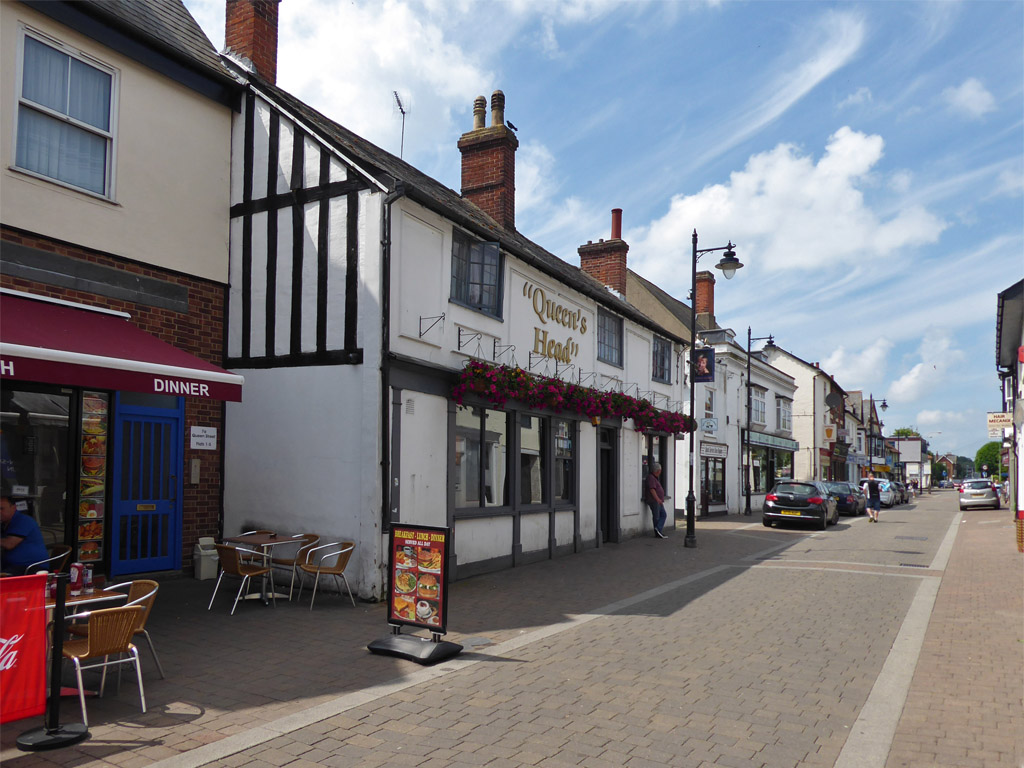
Queen Street, Haverhill, photographed on 3 June 2018. The rooflines and retained details are useful context for a repair brief; this view cannot establish a roof’s present condition or the work required. This historical photograph is not an example of our work. Photograph by Robin Webster · CC BY-SA 2.0.

Further guidance: Queen Street Haverhill conservation appraisal · West Suffolk conservation areas and appraisals · West Suffolk listed building consent · The Queen’s Head and Queen Street: Robin Webster photograph, 3 June 2018
Useful planning tools
Find the roofing guidance for your jobRoofing quote-scope checklist
What needs repairing?
A roofing repair should address the cause of a defect, rather than simply hide the mark indoors. Slipped tiles, damaged slates, loose ridge details, failed flashing and deteriorated junctions need different treatments. The roof covering, battens, underlay and supporting timber also have different jobs. A visible broken tile does not establish the condition of everything underneath. Ask for an inspection that identifies the fault, explains the proposed work and distinguishes confirmed damage from areas that cannot yet be seen. Photos taken safely by the contractor can make that explanation easier to follow.
Slipped tiles and damaged slates
A small missing piece can allow weather into the roof, but a series of slipped slates may indicate a wider fixing problem. Request a repair method suited to the actual covering and its condition. A new piece should fit the roof’s layout and weathering details; colour alone is not enough. Keep loose debris away from people without approaching the roof edge. If several repairs have already failed, give the roofer their dates and any invoices so the next inspection considers why movement keeps occurring.
Ridges, valleys and flashings
Waterproofing is especially important where slopes meet and where the covering meets a chimney, wall or rooflight. A quote describing only “seal the roof” is difficult to assess. Ask which junction is defective, what will be renewed and how adjoining materials will be protected. Mortar, dry-fix details, sheet metal and proprietary components cannot be substituted casually. Photograph indoor staining and explain whether it appears after wind-driven rain, steady rain or cold weather; those observations help target inspection without proving the cause.
For a valley or leadwork enquiry, give the junction involved and any repeated patching. Ask whether the proposed work renews the weathering detail, repairs adjacent coverings or merely provides temporary protection. The inspection should explain the failing junction and what can be retained. Do not ask for every flashing to be replaced from a stain alone.
Useful next steps
Repair or replace?
Replacement may be appropriate when deterioration is widespread or the existing system cannot reliably be repaired. It should not follow automatically from one leak or the age of the house. Ask the contractor to explain the remaining serviceability of the covering and the extent of underlying damage. Compare a clearly scoped repair with a replacement specification, including access and reinstatement. A repair can be a sensible permanent solution, while a temporary weatherproofing measure may only buy time for further investigation.
Ask for separate explanations of the covering and the supporting structure. Reusing sound slates while renewing failed fixings can be a different job from replacing a complete roof. A recommendation should identify the affected areas and explain why a less extensive repair would not last. If the inspection is limited by access, record that limitation in the quote rather than accepting an unexplained certainty.
| Scope | What to establish |
|---|---|
| Local covering repair | Which tiles or slates are affected, and whether their fixings and the layers below are sound. |
| Junction repair | Which valley, flashing or rooflight detail is failing; how adjoining materials will be weathered. |
| Wider renewal | Evidence that defects extend across the roof, what will be retained, and why smaller repairs are unsuitable. |
Useful next steps
Repairing retained Haverhill roof details
Begin with the defect and existing construction: a slipped covering, failed flashing and widespread deterioration need different scopes. Ask which material can be retained, how matching replacements will be selected and what inspection supports a larger repair. Do not infer that an older roof must be replaced.
Haverhill's 2008 Queen Street appraisal describes red-brick buildings with slate roofs and some rendered/tiled examples. That is historical character evidence for this conservation area, not a survey of your roof. Establish the actual covering and property controls before changing its appearance. Request access, waste handling, temporary protection and making good as part of the quotation.
Sources: Queen Street Haverhill conservation appraisal · West Suffolk conservation areas and appraisals · West Suffolk listed building consent
Compare roof-repair quotations
Ask whether the quote includes…
Ask for the defect being repaired, matching materials, access equipment and making good to be listed. Keep a targeted repair separate from wider replacement options and request the reason for each.
- Identified defect and repaired area, with any uninspected areas explained
- Covering/fixing identification and valley, ridge or flashing work actually included
- Safe access, temporary protection, removal and making good
- Evidence for completion, written guarantee terms where offered and a process for extra work
Preparing for the visit
Give your postcode, property type, approximate height and any access restrictions, such as a narrow side passage or shared courtyard. Mention solar panels, rooflights and known asbestos materials. If a neighbour or landlord controls access or the roof is shared, clarify who can authorise the work. Safe ground-level photographs can help describe the location. Do not climb a ladder or enter an unsafe loft to obtain them. Move belongings away from affected rooms where it is safe, and keep records of previous work.
Useful next steps
After the repair
Ask for a record of completed work, any recommendations and the terms of any workmanship or product warranty. Check how concerns are reported and which part of the job a warranty covers. An indoor stain may need time to dry even after the external fault is resolved, so distinguish residual staining from new moisture. If the problem returns, note the weather and timing and report it promptly. New water ingress, moving debris or an unsafe ceiling requires reassessment; do not repeatedly cover damage and assume it is cosmetic.
If the same symptom returns, keep the repair date, scope and safe photographs of fresh moisture or movement. Ask whether the original defect has recurred, another entry route exists or the earlier inspection was limited. That distinction helps decide between a workmanship concern, further investigation and a new repair scope.