YOUR CHIMNEY REPAIRS ENQUIRY
Separate stack, flashing and flue work
Loose masonry, damaged pointing or damp around a stack? Describe the external fault, appliance use and shared arrangements before choosing work.
What to include in your enquiry
- Masonry/flashing/pot symptoms and any falling material
- Appliance/flue use and shared stack arrangements
- Previous work, property controls and safe access
What should the quote cover?
Separate masonry, pointing, flashings, pots and any removal proposal. Include scaffold arrangements and making good to the roof; ask which assessments are needed before an unused stack is altered.
Does an unused chimney mean it can simply be removed?
No. Use, structure, adjoining ownership and building status need checking. Request a defined proposal and the appropriate approvals before work proceeds.
Property checks for chimney repairs
Queen Street’s historic appraisal includes shared chimney features. That makes ownership and access worthwhile questions on relevant buildings, not a claim that every Haverhill chimney is shared. Identify which stack, flue and roof junction the proposal concerns before authorising removal or alteration.
- Explain whether the chimney is in use and whether another home shares the stack.
- Record visible defects from ground level and any internal leak.
- Ask who will confirm structural, flue and protected-building considerations.
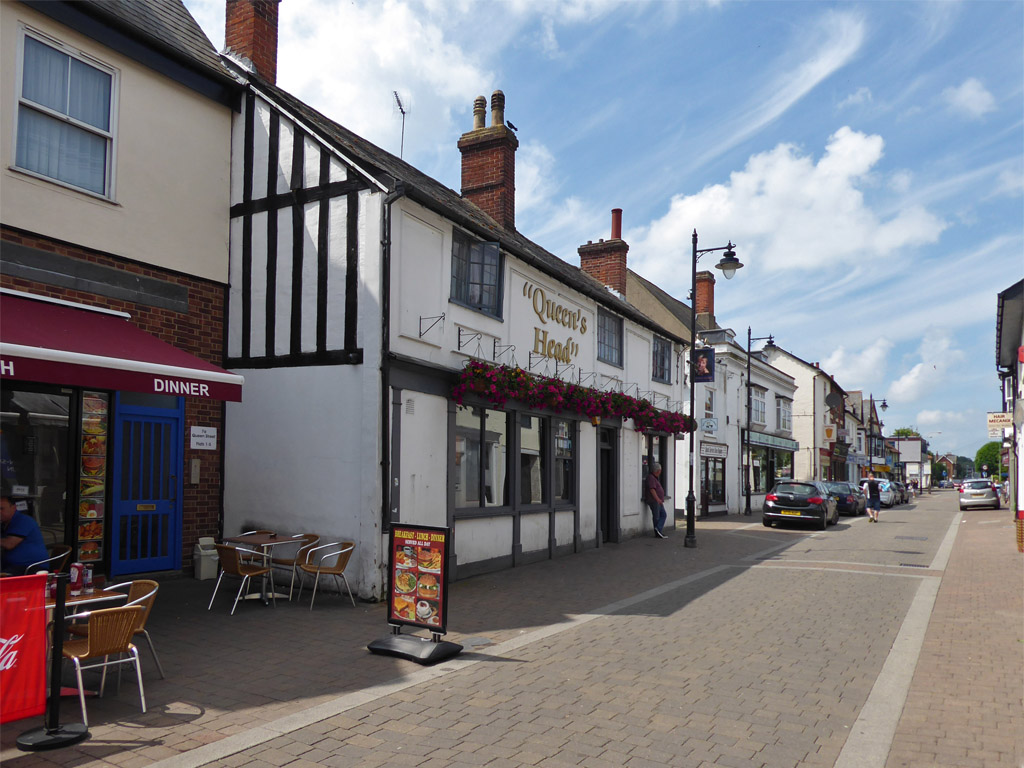
Queen Street, Haverhill, photographed on 3 June 2018. The visible chimney details help describe the streetscape; they do not establish shared ownership, flue condition or permission to alter a stack. This historical photograph is not an example of our work. Photograph by Robin Webster · CC BY-SA 2.0.

Further guidance: Queen Street Haverhill conservation appraisal · West Suffolk listed building consent · The Queen’s Head and Queen Street: Robin Webster photograph, 3 June 2018
Which part of the chimney needs help?
A chimney can involve masonry, pots, weathering details and an internal flue, each with a different role. Damp nearby may relate to flashing or masonry, while smoke problems require an appropriate appliance/flue assessment. Tell the contractor whether the chimney is in use and which symptom you have noticed. A roofing visit is not a substitute for a gas-appliance safety check or a chimney-sweeping service. Establish the right scope and professional expertise before asking one business to treat every chimney issue.
Leaks around the stack
Water can enter at the junction with the roof or through another defect in the stack. The indoor mark is evidence of moisture, not proof of one failed piece of lead. Ask for inspection of the junction and the surrounding covering, with an explanation of what is confirmed. If masonry work and flashing repairs are both proposed, identify each in the quotation. Temporary sealants may be weatherproofing measures rather than permanent solutions. Mention previous repairs and whether the leak follows particular weather conditions.
Useful next steps
Loose masonry or chimney pots
Falling debris can endanger people below. Keep clear of the affected area and seek urgent professional advice rather than inspecting from a ladder. Call emergency services if there is immediate danger to life. A professional may need suitable access and structural assessment before deciding what can be repaired safely. Do not assume that taking the stack down is the simplest lawful or technically suitable answer. Its stability, shared ownership, active flues and historic significance can all affect the options.
Useful next steps
Repointing and compatible repairs
Masonry repairs should suit the original construction and the exposure of the stack. An inappropriate surface treatment can mask rather than cure deterioration. Ask which mortar or repair method is proposed and what preparation is included. This is particularly important on traditional buildings where retained fabric and appearance matter. A contractor should distinguish sound material from material that needs work and explain why. The homeowner’s role is to request that assessment and written scope, not choose a mortar mix or climb up to test the joints.
Request a specification that distinguishes brick or stone repairs, mortar joints, flashings and the upper weathering details. Where an active flue is involved, establish which appropriately qualified specialist will check that part. A roofer repairing external flashing does not automatically inspect a heating appliance or certify its flue. Tell both contractors about shared stacks and appliance use so responsibilities are clear before the work begins.
Unused and active chimneys
An unused fireplace does not mean the external chimney has stopped needing maintenance. Alterations can affect ventilation and moisture as well as appearance. For an active appliance, retain appropriate specialist advice before making changes to the flue, terminal or ventilation. Explain the appliance type when enquiring and do not use a suspected unsafe system. If a carbon-monoxide alarm activates or occupants feel unwell, follow urgent emergency guidance and leave the affected area; do not wait for a roofing enquiry response.
Ask which flues are connected, including neighbouring appliances where the stack is shared, before altering pots, terminals or ventilation. External masonry/leadwork, flue assessment and appliance work have separate responsibilities. An unused fireplace does not establish that every flue in the stack is redundant.
What should a chimney repair quote cover?
Separate masonry, pointing, flashings, pots and any removal proposal. Include scaffold arrangements and making good to the roof; ask which assessments are needed before an unused stack is altered.
- External masonry/pointing and weathering defect identified
- Flashing, pots and upper stack work versus separate flue/appliance assessment
- Shared ownership/authorisation and property-control checks
- Scaffold, roof making good, waste and completion evidence
Useful next steps
What to tell a local business
Give the property postcode, position and height of the stack, whether it is active, the symptom and any known shared ownership. Explain if pieces are loose or have already fallen, and stay away from the area. Mention listed or conservation status and previous chimney/roof repairs. Safe photographs can help with preparation, but do not delay urgent direct help while trying to obtain them. Sending an enquiry is a request for review and possible connection under the stated sharing notice, not an instruction for immediate attendance.